


YouTube Tags Extractor
Tags from a YouTube video can be extracted using this tool. Simply enter the URL and your tool will do the rest.
How to use YouTube tag Extractor
First choose the videos from which you have to extract the tags and paste it below and from here you can get the tags
YouTube tags are the hidden metatags connected with YouTube videos. Not all videos include these tags since it is up to the video publisher to include them when they submit the video. The Tag Extractor tool is a convenient way to extract and expose the meta tags associated with any publicly available video. Extraction of YouTube Tags may be quite informative in understanding how rival videos and other high-performing videos use these tags to increase their performance.
Tags are not the same as Hashtags, which appear in the video description and above the video title.
What are YouTube Tags?
The confusing thing about YouTube is there are two types of tags:
- Tags: which are the invisibly connected "meta" Tags with a video This is what the Tag extractor pulls out.
- HashTags: which are the visible tags shown above a video title. See more information about YouTube HashTags.
When a video is posted to YouTube, tags are applied to it. They do not have pound (#) marks in front of them, unlike Hashtags, and they can also have spaces to cover a string of numerous words. It's best to use all lowercase Tags with alpha-numeric characters.
Since these Tags are invisible on the actual video page, our friends at SEOptimer generously shared some screenshots with us so we can peek behind the scenes at how they tagged their videos.
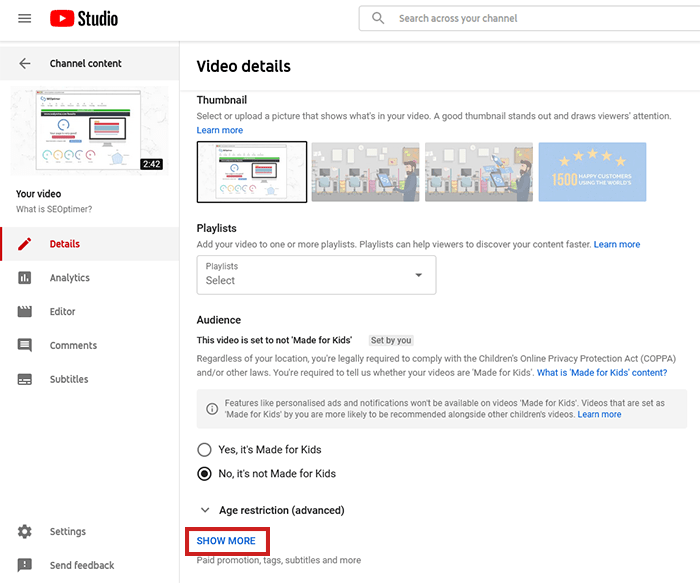
In YouTube Studio, at the bottom of the “Video details” page is a hyperlink “Show More”:
Once this is clicked, it expands further options including “Tags”:
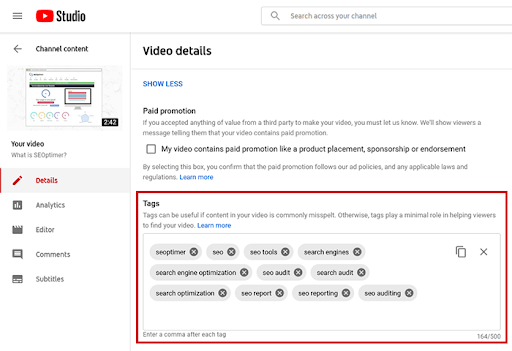
Tags on a YouTube video may be up to 500 characters long - that's a lot! The SEOptimer video includes 11 Tags, as seen in the sample above. These Tags only take up 164 of the 500 character maximum, so there's plenty of room for more.
Now here comes the magic. Using the YouTube Tag Extractor, we can easily reveal these hidden meta tags with the click of a button:
You'll note that the Tags are extracted in the identical order that the author used. This offers you a wonderful idea of what the author considers to be (a) the most significant issues in the video and (b) the highest priority tags for the video SEO.
Why are YouTube Tags important?
So now we know the YouTube Tag Extractor works like magic on any public YouTube video and extracts the invisible meta tags whilst maintaining the order of those Tags as denoted by the author of the video.
But why is this important? You're probably viewing this page right now because you're interested in the broader topic of Video SEO. We know from YouTube that various signals contribute to the overall ranking on the search result page (title, description, hashtags, thumbnail, tags, quality of video, etc).
We advocate learning the fundamentals and use all of the capabilities available on YouTube to classify and attach meaning to your videos. The judgement is still out on the extent to which hidden meta tags effect search result ranks, but our advise is to always err on the side of optimization and use all YouTube capabilities concurrently. After all, the better YouTube knows what your video is about, the more likely it is that your films will rank higher in YouTube search results.
YouTube Tags strategy
There are some strategic considerations when extracting Tags from competitor videos. There are two possible scenarios when extracting Tags from a YouTube video using this tool:
1. The video has no Tags: This is extremely frequent since the Tags field is buried beneath the "Show More" text link at the bottom of the video information page in YouTube Studio. So, unless your opponents are YouTube experts, they will most likely ignore this and submit the video with no tags. This is a positive conclusion for you since any tags you put to your video will be more effective. Consider the terminology rivals use in the video title and description, as well as whether they employ Hashtags in the video description.
2. The video has Tags: like the SEOptimer example above, which revealed The next stage is to add 11 tags to their video. To evaluate the quality of these Tags, use your best judgement. Look for anything out of the ordinary or unusual. peculiar about the Tags and the sequence in which they appear. Again, the SEOptimer example above is a relatively common group. Tags that begin with Begin with the brand name "seoptimer," then expand to include broad category phrases like "SEO" and go much farther. include a sub-category specialised phrases such as "seo reports" The arrangement of these Tags reveals a lot about how they think about their core phrases.For direct rivals, we advocate using comparable broad Tags to be competitive, but also employing some unique Tags to catch specialized searches where you may have a competitive edge.
The beautiful thing about Tags is that you can modify them even after your films have been published. So, if you believe that certain of your videos may be performing better in search, or that your rivals are outperforming you on some key phrases, consider adjusting your Tags accordingly. One final point to consider when thinking about your Tags is what YouTube says just above the Tags input box:
